The project “Research Libraries as Data Hubs” has been initiated by the Swiss Science Council SSC within its Working Programme for the years 2024–2027. Academic libraries play a key role in knowledge production and are essential for the competitiveness of Higher Education Institutions. At the same time, they face major challenges due to current technological developments, changes in research, and scarcity of funding resources. Against this background, the SSC aims at contributing to secure and improve the services of Swiss research libraries and their framework conditions in the context of the digital transformation.
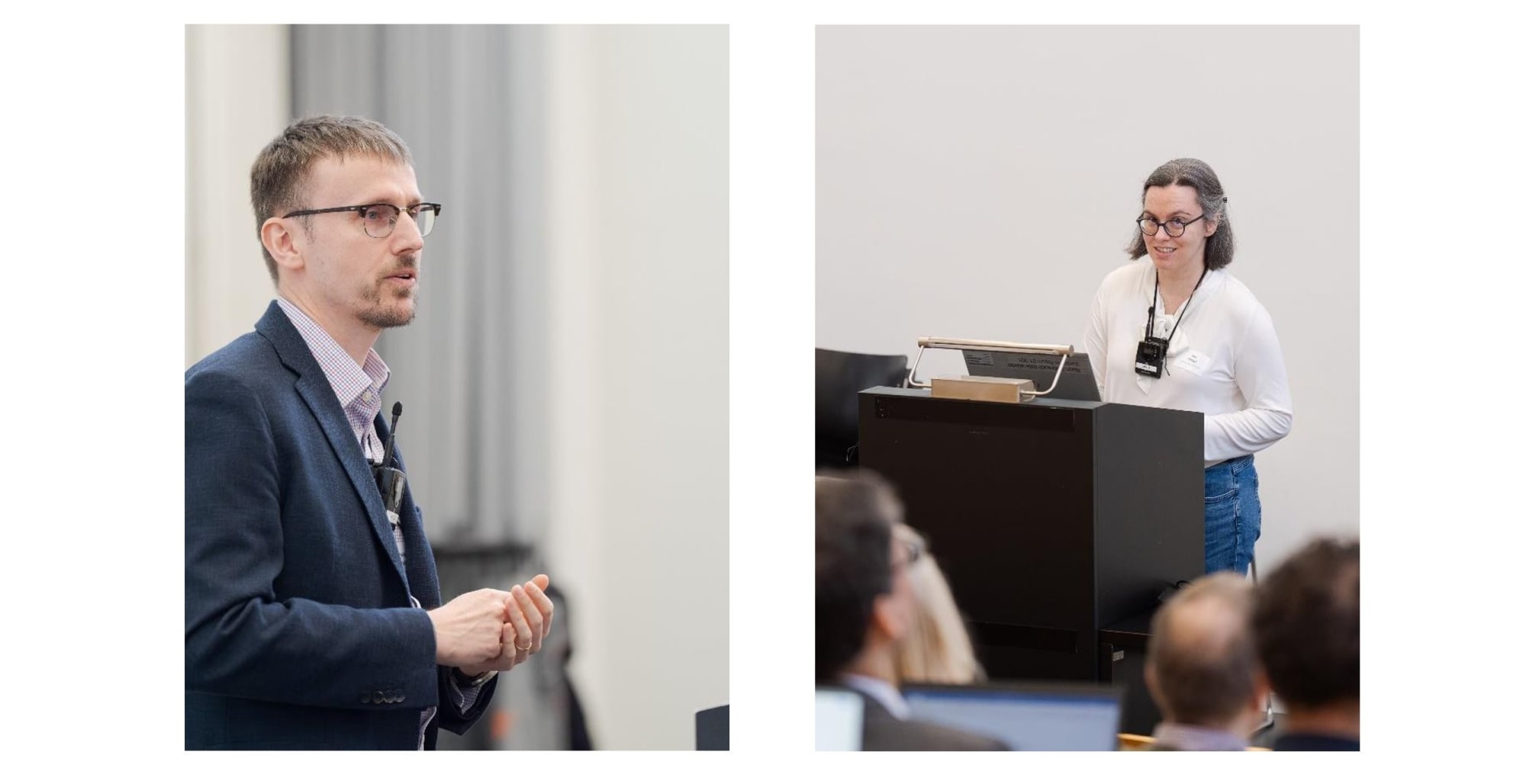
In order to present preliminary findings and put them up for discussion, on 4 April the SSC organised an event at the University of Bern . It was attended by around 50 stakeholders of academic libraries, service providers, repositories, and other organisations in the field of Education, Research and Innovation. SSC president Sabine Süsstrunk opened the event with a welcome address. Subsequently, the Council member and Working Group leader Susanna Burghartz outlined the findings of around 20 interviews which the SSC conducted over the last couple of months with various experts of Swiss research libraries (many of whom were present in the audience). One of the main findings is that the services provided by libraries are essential for research but often remain “invisible”. Dominique Foray, a member of the SSC Working Group, has characterised this phenomenon as the “shadow value” of research libraries.
After a coffee break in the foyer of the University, J. Philipp Trein from the University of Lausanne provided an insight into the concept of “Multi-level governance”, an important concept for understanding the mechanism of strategic collaboration within the Swiss federal system. Ana Petrus (scivia LLC / UAS of the Grisons) then presented some “good practices from abroad”, which are based on various interviews she has conducted with stakeholders from international library organisations as well as representatives of research libraries and service providers from outside Switzerland. Preliminary findings, such as the presence of library managers on the boards of higher education institutions and the importance of bottom-up networks, were addressed.